The short answer is any month; Antigua is warm all year and one of the driest islands in the Caribbean. The longer answer is that the island has a rhythm, and it’s worth knowing before you pick dates.
The seasons
December to April: the dry season. This is the island at its best and busiest. Days in the low-to-mid 80s, nights in the low 70s, a steady trade wind, almost no rain. The sea is at its coolest, which still means around 79°F. This is when flights are fullest, rates are highest across the island, and the restaurants and boats are all running. Christmas, New Year and the school holidays in February book out first, often a year ahead.
May and June: the sweet spot. The winter crowd has gone, the weather is still mostly dry, the sea is warming towards 82°F, and prices ease. If you can choose, choose this. Sailing Week at the end of April spills into early May at English Harbour.
July to November: the green season. Warmer and more humid, with days in the upper 80s and short, heavy showers that clear quickly. The island is greener, the sea is at its warmest (84°F in September and October), and it’s quiet: some restaurants close for a few weeks in September and October, and the island takes a breath. Rates are at their lowest.
Hurricane season runs officially from June to the end of November, with the highest risk in August, September and October. Antigua sits at the northern end of the Leeward Islands and has been hit, but direct hits are rare and are forecast days ahead. If you travel in these months, book flights and stays with flexible terms and buy travel insurance that covers weather. Our own cancellation window is generous for exactly this reason.
Month by month
- January – dry, breezy, low 80s. Peak season. The island is full and every boat is out.
- February – the same, plus school holidays. Book early.
- March – warm, dry, slightly less busy after the school holidays. Excellent.
- April – dry and warm. Sailing Week at the end of the month fills English Harbour and the south coast.
- May – warm, mostly dry, quieter. Our favourite month.
- June – warm, occasional showers, calm seas. Still quiet.
- July – hot, humid, some showers. Carnival at the end of the month in St. John’s.
- August – Carnival ends in the first days of the month. Hot and green.
- September – the quietest month. Warmest sea, some closures, real rain some days.
- October – similar. Rates at their lowest.
- November – the rain tails off, the island wakes up again, rates rise towards December.
- December – dry season returns. The first three weeks are calm and good value; Christmas week is not.
The dates that fill the island
Christmas and New Year. The whole island books out. If you want the last week of December, book it when you first think of it.
Antigua Sailing Week, late April into early May, brings racing yachts and crews from around the world to English Harbour and Falmouth. It’s a spectacle and a party, mostly on the south coast; Dickenson Bay stays calm. Book restaurants on the south coast well ahead that week.
Carnival, the last week of July into the first Tuesday of August, is the island’s big street festival: steel bands, costumed parades, calypso competitions and the all-night J’ouvert, centred on St. John’s. It’s ten minutes from us and it’s wonderful. Bring earplugs if you’re a light sleeper and staying in town.
Shirley Heights, every Sunday. The sunset party at the lookout above English Harbour runs every Sunday of the year and is the island’s institution: a steel band from the late afternoon, a barbecue, then reggae and a crowd as the sun goes down. Leave by 4 to get a table for the sunset.
Cruise-ship days. St. John’s is a cruise port, and on days with several ships in, the town and the nearest beaches are busy from mid-morning to mid-afternoon. The schedule is public; check it if you’re planning a day in town or at Valley Church.
When we go
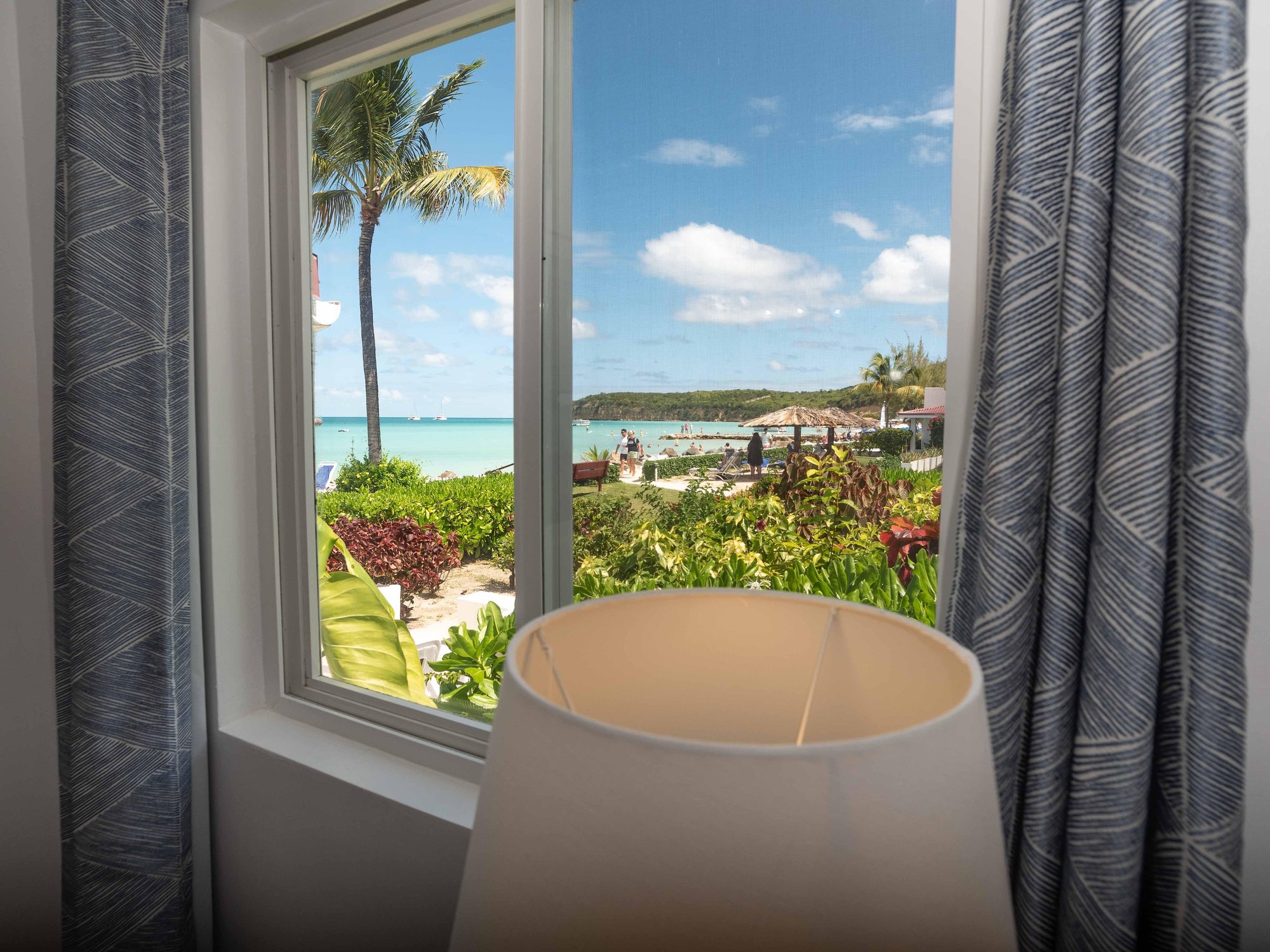
We’re there as much of the year as we can be. If you asked us to pick a fortnight, it would be the second half of May, or early December before the holidays: dry, warm, quiet, and the beach outside the door with hardly anyone on it.