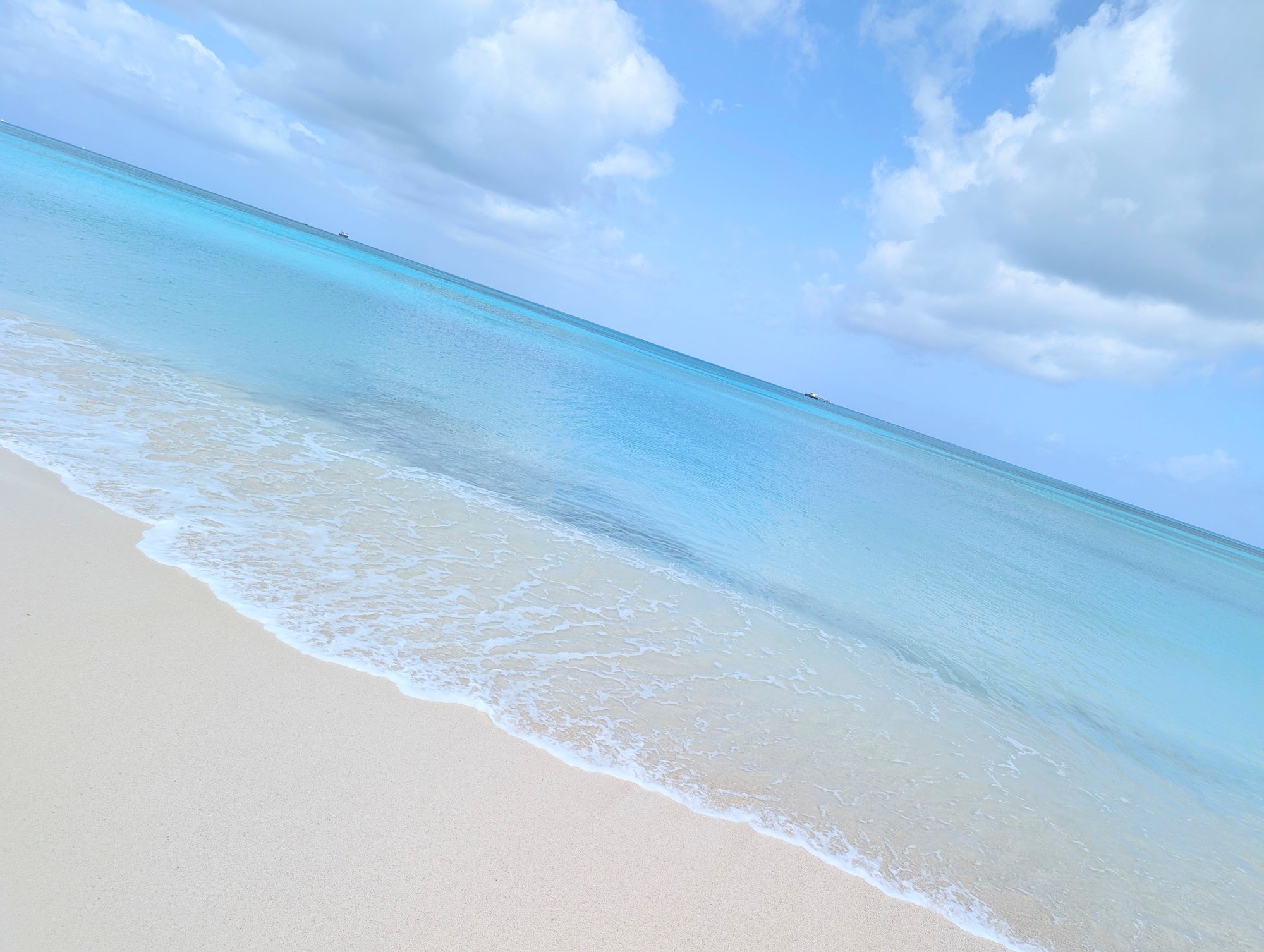
The line about 365 beaches is true enough that nobody bothers checking. What matters is that they’re very different from each other, and that the best of them are a short drive from Dickenson Bay in different directions. Most days you’ll stay on our beach, because it’s calm and it’s outside the door. These are the ones worth the car.
Times below are from Antigua Village. Bring water and shade to the quieter beaches; several have no facilities at all.
The west coast, 25–35 minutes
Valley Church. The postcard beach: shallow, glassy, pale as milk, with a bar and loungers at one end and nothing at the other. It’s also the one the cruise-ship excursions use, so go early or on a day with no ships in port. About 30 minutes.
Ffryes Beach. Long, wide and quiet, with a beach bar on the hill behind it for lunch and a view back along the coast. Calm water, few people on weekdays. About 30 minutes.
Darkwood. The next beach south from Ffryes, with the road running just behind it and a beach bar that does grilled fish. Good snorkelling off the rocks at the south end. About 30 minutes.
Turner’s Beach. Further south again, a wide, calm beach with a restaurant and loungers. Popular with families. About 35 minutes.
Jolly Harbour. Not so much a beach as a marina village with a good one attached: shops, a supermarket, restaurants and a long crescent of sand at Jolly Beach. Useful if you want a beach day with lunch options. About 25 minutes.
The east and south, 40–50 minutes
Half Moon Bay. The one people talk about: a mile-long crescent of pink-white sand on the Atlantic side, backed by scrub and almost nothing else. Surf rolls into the open end; the sheltered end behind the reef is calm enough to swim. There’s a small bar in season and no shade to speak of. Bring everything. About 45 minutes, on roads that get rougher as you go.
Pigeon Point. A calm beach just outside Falmouth with a French beach club, Catherine’s Café Plage, on the sand. The right beach to combine with a morning at Nelson’s Dockyard. About 45 minutes.
Galleon Beach. Inside English Harbour, across the water from the Dockyard, reached by road or by water taxi from the Dockyard. Sheltered, good snorkelling, sea turtles. About 50 minutes by road.
Long Bay. On the east coast near Devil’s Bridge: a shallow, reef-protected bay that’s ideal for small children, with a couple of resorts and a beach bar. Combine it with Devil’s Bridge and Stingray City. About 40 minutes.
Close to home, 10 minutes
Fort James. The beach just north of St. John’s, under the ruins of an 18th-century fort: long, local, with a beach bar that fills up on Sunday afternoons and a view across to the cruise ships. The nearest change of scene from Dickenson Bay.
Runaway Bay. The next bay south of Dickenson, quieter than ours and a pleasant walk along the sand at low tide.
By boat
Great Bird Island. An uninhabited islet in the northeast, reached on a boat trip that usually includes snorkelling on the reef, a sandbar to wade on and a short climb for the view over the offshore islands. Half a day, and one of the best things to do with children who can swim.
Cades Reef. The long reef off the southwest coast, protected as a marine park, is where most of the catamaran day sails go to snorkel. Several boats pick up from Dickenson Bay itself.
Barbuda. Antigua’s sister island, ninety minutes away by ferry from St. John’s, has beaches that make Antigua’s look busy: miles of pink-tinged sand with nobody on them, and the largest frigate-bird colony in the Caribbean in the lagoon. A long, unforgettable day.
A note on Sundays
Beaches near St. John’s, especially Fort James, are where the island itself goes on Sundays, with music, food and families. If you want that, go. If you want quiet, Sunday is the day for the far beaches, and Shirley Heights at sunset on the way home.